A roof in New Jersey does more than keep the rain out. It rides out nor’easters, spring hail, hot, humid summers, and the salt air that sneaks miles inland from the Shore. Choosing a sustainable roof here is not just about the planet. It is about resilience, utility bills, resale value, and how long you can go before calling for another crew and a dumpster. The greenest roof is usually the one that lasts the longest with the least maintenance, and the material fit depends on your neighborhood, your roof’s geometry, and how your house handles moisture and heat.
This guide distills what actually matters when considering an eco-minded roof replacement in New Jersey, from material pros and cons to code quirks, price ranges, and how to work with roofing companies in New Jersey that take stewardship seriously.
What “sustainable” means on a New Jersey roof
People tend to focus on recycled content or solar shingles, which can help, but four other levers usually move the needle more.
First, longevity. Doubling service life can slash embodied carbon per year of use. In NJ’s climate, a metal roof that lasts 50 years often outperforms two cycles of asphalt shingles even if the metal takes more energy to produce.
Second, heat management. Roof color and coating affect attic temperatures, HVAC loads, and shingle life. In much of NJ, a lighter, reflective surface reduces peak summer heat without creating winter penalties large enough to erase the gains. That is especially true in climate zone 4A, which covers most of the state.
Third, water. Managing rainwater well protects sheathing and framing, avoids mold in the attic, and reduces stormwater runoff that overwhelms local systems. A sound roofing system includes underlayment, flashing, ventilation, and gutters sized for sudden cloudbursts.
Fourth, end of life. Can the material be recycled locally, and will the contractor actually do it? Asphalt shingle recycling exists, but availability varies by county. Metal is easier to capture and sell as scrap.
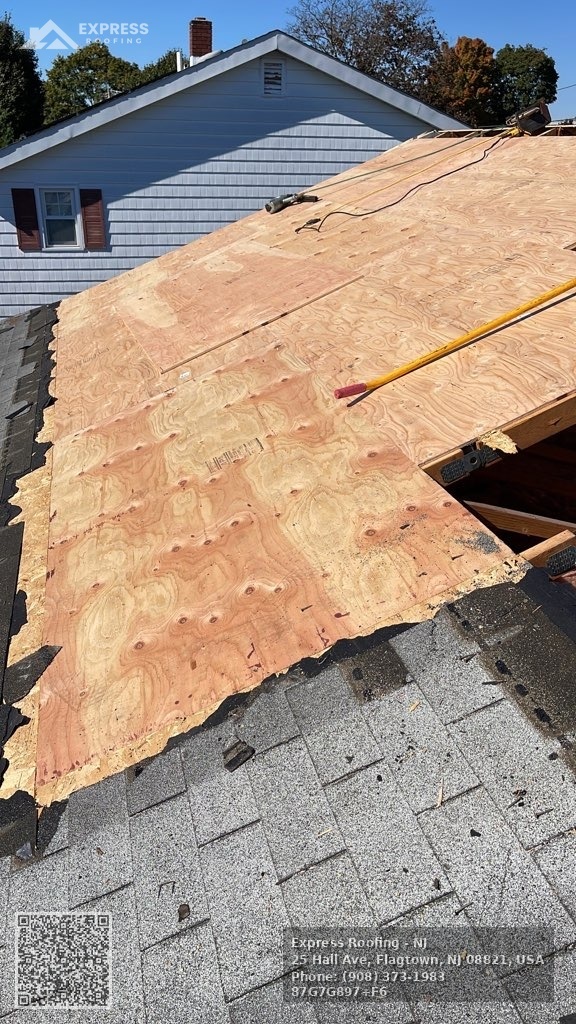
New Jersey climate realities that shape the decision
Along the coast, wind and salt air challenge fasteners and finishes. Inland, tree cover and shade encourage algae, particularly on north-facing slopes. In the northwest hills, colder winters and heavier snow bring ice-dam risk. The state sees hail most springs, and when tropical remnants push north, gusts can test the high end of shingle wind ratings.
Two code items matter. New Jersey adopts the International Residential Code with state amendments and follows the IECC for energy. Most of the state sits in climate zone 4A, with portions of Sussex and Warren in 5A. Ice barrier underlayment is required along eaves in many jurisdictions, which adds to durability and cost but is not negotiable. Also, local permit offices take roof replacement seriously. Expect inspections for sheathing condition, ventilation, and nailing patterns if the inspector gets on the roof.
With those conditions in mind, let us look at the sustainable material choices that actually hold up here.
Recycled-content asphalt shingles: greener than you think, within limits
Architectural asphalt shingles still cover the majority of New Jersey homes. On the sustainability scale, they sit in the middle. Modern shingles often include recycled content in the mat or asphalt. Algae-resistant granules help in humid areas, cutting the temptation to bleach-clean a roof every other summer. Light gray or off-white blends can run several degrees cooler under August sun than charcoal tones.
The big knock is lifespan. A branded architectural shingle installed by a careful crew often gives 20 to 30 years in the state’s climate, but that number leans low for homes shaded by hardwoods where leaves trap moisture. Tear off generates a heavy waste stream. Some regions accept asphalt shingles for recycling into road base or hot mix, but capacity and contamination rules vary. When you search Roofing contractor near me, ask whether the crew separates shingles for recycling and which facility they use. If the estimator does not have a clear answer, they likely send everything to the landfill.
On cost, asphalt remains the budget baseline. For a simple 2,000 square foot roof surface, expect new roof cost in the range of roughly 10,000 to 18,000 dollars for midgrade architectural shingles in New Jersey, depending on pitch, layers to remove, and flashing complexity. Steeper roofs, skylights, and multiple dormers push the price of new roof projects toward the higher end.
Shingles make sense for many homes, but if you want to move the sustainability needle farther, consider metal.
Standing seam metal: long service life, recyclable, and cool-roof capable
Standing seam aluminum or steel is a workhorse option for NJ that pairs durability with fully recyclable content. Factory-applied Kynar finishes hold color and resist coastal corrosion better than basic painted metal. A cool roof coating with high solar reflectance and thermal emittance can cut attic temperatures and ease the load on older air conditioners. In hail-prone areas, ask for thicker panels and a profile that hides fasteners. If you live near the Shore, aluminum often outlasts steel. Inland, galvanized or Galvalume steel offers excellent value.
Proper details make or break metal in our climate. Ice and water shield under the panels at eaves and valleys matters. Ridge Helpful hints and soffit vents must balance, or condensation will frost up the underside in February and drip onto insulation when a warm spell hits. Coastal homes need stainless or coated fasteners rated for salt exposure.
Price ranges for standing seam vary widely, but for a typical NJ home the project often lands between 28,000 and 50,000 dollars, with complex roofs higher. That delta over asphalt buys 40 to 60 years of service if installed well. On a purely carbon-per-year basis, that math tends to pencil out in metal’s favor.
Copper and zinc for historic districts or lifetime builds
Copper and zinc develop a patina that protects and self-heals small scratches. Homeowners in historic towns like Lambertville or Montclair sometimes choose these metals for accent roofs or entire houses. They carry a premium and demand craftsmanship. For pure sustainability, their longevity is the draw. A properly detailed copper roof can outlast you and the next owner. For budgets and neighborhoods where the look fits, they are among the most durable options available. Expect substantial new roof cost uplifts and plan to verify that your installer has experience with soldered seams, thermal movement, and compatible underlayments.
Slate and synthetic slate: classic NJ look with different footprints
Real slate appears across older parts of New Jersey. It is hard to beat its service life, often 75 to 100 years. Reclaimed slate keeps historic houses true and avoids new quarrying. The catch is structure. A 100-year-old home built for slate can carry it. A 1970s colonial likely cannot without structural work. Skilled labor for slate is also specialized.
Synthetic slate made from polymers or recycled rubber offers a middle path. It lightens the load while capturing the look. Many products carry high wind and impact ratings and are fully recyclable at end of life. They do not match natural slate’s century-long timeline, but 40 to 50 years is common for quality brands when installed with proper underlayment and flashing.
For budgeting, real slate on a typical NJ home often runs 45,000 to 90,000 dollars or more. Synthetic slate tends to fall in the 25,000 to 45,000 dollar band, again sensitive to roof complexity.
Cedar shingles and shakes: beauty with maintenance strings attached
Cedar reads warm and timeless, and responsibly harvested wood can be carbon friendly. In New Jersey, moisture and shade shorten cedar’s life. Without aggressive maintenance, expect 15 to 25 years, with moss creeping in earlier on north slopes. Fire codes and insurance can complicate cedar in some jurisdictions. If you love the look, ask about treated, certifiably sourced products and plan for routine cleaning and targeted Roof repair work. For most homeowners chasing sustainability, metal or slate will win on service life and maintenance footprint.
Single ply and coatings for low-slope roofs
Rowhomes, additions, and modern designs often include low-slope sections. Here, TPO and PVC membranes deliver high reflectivity and heat-welded seams. EPDM rubber is time tested, often black, and can be paired with a white coating for reflectivity. Coatings can also extend the life of an aged metal or membrane roof if the substrate is sound and details are handled correctly. Sustainable choices in this category focus on chemistry, reflectivity, and recyclability at tear-off. Ask your contractor about membrane thickness, reinforcement, and whether they run full-coverage tapered insulation to improve drainage.
Green roofs and solar shingles: compelling, but not plug-and-play
Green or living roofs appear in Hoboken, Jersey City, and on institutional buildings across the state. They help with stormwater, urban heat, and pollinator habitat. On single family homes, the weight, waterproofing, and ongoing maintenance limit where they make sense. Extensive systems, which are thinner and lighter, typically add 15 to 30 pounds per square foot when saturated. Many existing roofs need structural work first. Installed costs vary widely, but for a retrofit, 25 to 45 dollars per square foot is a fair planning range before structural upgrades. If you are already replacing a low-slope membrane, this can be the right moment to evaluate feasibility with a structural engineer.
Solar shingles draw attention. They clean up the look compared to rack-mounted panels. Output per square foot is lower than conventional modules, and serviceability can be trickier. In New Jersey’s robust solar market, the best sustainability and financial case still leans toward standard modules on a rack with flashed penetrations into a durable roof underneath. If you prefer the integrated look, work with a roofing contractor and a solar installer who coordinate warranties and electrical interconnection. Federal incentives change, and state programs such as SREC-II evolve, so confirm current terms before locking in the design.
What roofing really costs in New Jersey, and what drives the spread
Two identical houses on paper can see wildly different bids. When clients ask about new roof cost, the square footage is only the start. Roof pitch and geometry, the number of valleys and penetrations, access for dumpsters and material lifts, local disposal fees, and whether the sheathing needs replacement all matter. Code requires ice barrier along eaves in many parts of NJ, and some towns require a second inspection after tear-off to check for damaged wood. Premium underlayments, copper flashings, or a high-wind nailing pattern each nudge price of new roof projects up a bit. Skilled labor is not cheap, and you do not want cheap labor on a weather system that protects your house.
As a rough guide for a 2,000 square foot roof surface in New Jersey:
- Architectural asphalt: 10,000 to 18,000 dollars in straightforward cases. Heavier tear-offs, steep pitches, and elaborate flashing packages can push to the low 20s. Standing seam metal: 28,000 to 50,000 dollars, with aluminum on the coast and complex geometries higher. Synthetic slate: 25,000 to 45,000 dollars. Natural slate: 45,000 to 90,000 dollars, very dependent on access and detailing. Low-slope membranes: 9 to 18 dollars per square foot for TPO or PVC on simple layouts, higher with tapered insulation and numerous penetrations.
Those ranges reflect typical contractor pricing in the region and assume licensed, insured crews with permits and inspections. If a bid falls far below the bottom of these bands, look hard at scope, underlayments, ventilation, and warranties. If a bid lands high, ask what details or upgrades are included.
Repair first, replace when the evidence piles up
A conscientious Roofing repairman near me should talk you out of replacement when a targeted Roof repair will serve you well. Replace shingles lost in a northeaster, reflash a leaky chimney, or swap a failing skylight curb and you may buy five quiet years. Replacement becomes the better move when you see widespread granular loss, curling tabs, chronic attic leaks after wind-driven rain, or multiple past repairs that have not held. On a metal roof, loose seams, failing sealant, and widespread coating breakdown signal the need for a bigger intervention. Insurers treat storm damage differently than age, so an inspection and photo documentation help when filing a claim after hail or high winds.
Ventilation, insulation, and ice dam prevention
In New Jersey, many roof problems are house problems wearing a disguise. A poorly vented attic cooks shingles from below in August and creates ice dams in February. The recipe for durability is simple but often botched: continuous intake at the soffits, continuous exhaust at the ridge, clear airflow channels above the insulation, and air sealing at the attic floor around lights, bath fans, and top plates. When replacing a roof, it is smart to coordinate attic work. Dense-pack the sloped ceilings, add baffles at the eaves, and seal the attic hatch. Those steps reduce the need for mechanical Roof repair later and make every roofing material perform closer to its rated life.
The sustainability details that separate average from excellent
Good roofing companies in New Jersey know that sustainability lives in details.
Valley design. Open metal valleys shed debris better under oak trees. Closed-cut shingle valleys look cleaner but catch leaves and hold moisture.
Flashing metals. Mixing copper with galvanized steel invites galvanic corrosion near the Shore. Stick with compatible metals and gaskets designed for salt air.
Fastener patterns. High-wind nailing can keep shingles on during the rare gust. Inspectors in coastal towns may look for this. It is a small cost for peace of mind.
Underlayment choices. Synthetic underlayments hold up better during extended tear-off and re-roof cycles than felt, especially when afternoon storms blow through. Ice and water shield at eaves and in valleys has become standard practice for a reason.
Algae resistance. If your street sees green streaks by mid-summer, specify shingles with copper or zinc granules in the blend and install a zinc strip near the ridge. That small strip can prolong the clean look without chemical washes.
Water Price of new roof harvesting. New gutters and downspouts are part of many roof replacements. If you plan to run rain barrels or a cistern, ask the roofer to size outlets and add leaf diverters that make maintenance easy.
Rebates, credits, and what not to count on
Incentives shift. The federal tax credit for general roofing materials has changed over the years, and as of recent guidance, standard roofing materials are not broadly eligible under the residential energy efficiency credit. Reflective coatings on low-slope commercial roofs may qualify under different rules. Solar systems remain eligible for federal credits, and New Jersey’s solar market includes performance incentives that can improve payback for rack-mounted modules. The New Jersey Clean Energy Program focuses on HVAC, envelope insulation, and appliances. Before you choose a material solely for a perceived credit, confirm current terms with your tax professional and check state program websites. Counting on a credit that disappears in rulemaking is a rough way to budget a roof.
How to choose the right contractor for a sustainable roof in NJ
Searching Roofing contractor near me or calling the first ad is hit or miss. A sustainable roof rests on design judgment and execution detail, not buzzwords. I tell clients to vet three things: legal standing, craft capability, and sustainability practice.
- Legal and insurance. In New Jersey, residential roofing falls under the Home Improvement Contractor registration. Ask for the number, proof of liability and workers’ comp insurance, and your town’s permit requirements. A contractor comfortable pulling permits is a contractor who expects an inspector to visit. Craft capability. Ask exactly how they handle ventilation on your roof, what underlayment and flashing metals they will use, and to show photos of past jobs with similar pitch and complexity. For metal, ask about panel thickness and whether they roll-form on site. For slate, ask about selective repair techniques and how they stage ladders to avoid broken tiles. Sustainability practice. Can they recycle asphalt tear-off where facilities allow it? Will they separate metal for scrap? Do they offer cool roof colors at no or low premium? Can they coordinate with an insulation crew for attic air sealing the week before tear-off?
A good estimator will volunteer trade-offs. If all you hear is hype about fifty-year warranties without a word on attic humidity or ridge-to-soffit ventilation, keep looking.
A quick homeowner checklist before you sign a roofing contract
- Confirm attic ventilation design, air sealing scope, and insulation upgrades planned with the roof. Verify underlayments and flashings by brand and type, including ice and water shield at eaves and valleys. Ask how tear-off waste will be handled and whether asphalt shingles can be recycled in your county. Get material options in cool colors or reflective coatings where they make sense for your roof type. Ensure permits, inspections, and insurance are in order, and pin down the start date and daily cleanup plan.
These five items prevent the most common disappointments and keep a green intent from getting lost in the rush to finish.
Real-world examples from around the state
In Monmouth County, a 1950s cape with a simple gable got a standing seam aluminum roof in a light gray Kynar finish. The homeowner had battled algae and black streaks for years with asphalt. They paired the roof with new soffit vents, a continuous ridge vent, and R-49 cellulose blown into the attic. In August, indoor temperatures stabilized, and the air conditioner cycles dropped about 15 percent during heat waves. Two summers in, the roof still looks fresh, and the gutters stay cleaner without granular run-off.
In Morristown, a Victorian with intricate dormers needed Roof repair after a windstorm, but the patched shingles looked tired next to the neighbor’s renovation. Instead of chasing shingles one storm at a time, the owners committed to a full re-roof with a high-wind shingle nailing pattern, copper step flashing at sidewalls, and an open stainless valley at the central trough where leaves pile up. They also added a zinc strip to combat algae. The result kept the home’s character and cut the ladder trips every fall to scrape out moss.
In Jersey City, a two-family with a low-slope roof swapped a worn black EPDM for white TPO, added tapered insulation to fix ponding, and upgraded roof drains. The interior top floor runs cooler now, and the building’s stormwater fees fell thanks to measured reductions in runoff volume. The owner had originally asked about a green roof, but structural review showed a modest margin. The membrane and insulation approach delivered most of the energy and durability gains without structural work.
Final thoughts for making a better choice
Sustainable roofing in New Jersey is not a single product choice. It is a set of coordinated decisions that respect local weather, code, and the house you live in. A sturdy assembly with thoughtful ventilation and water management will make any material last longer. A reflective color and a ridge vent can do more for your summer comfort than an exotic shingle color that traps heat. Recycling tear-off may be possible in your county if the crew separates the load. A contractor who spends time on these details will often save you money over the roof’s service life, even if the upfront bid is not the cheapest.
If you are pricing your own project and wondering about the price of new roof options, do not be shy about asking for two or three material packages with line items. Bid one package with midgrade architectural shingles and algae resistance. Bid another with standing seam metal and a cool roof finish. Add a third that keeps the first package but pairs it with attic air sealing and insulation upgrades. On the day you write the check, you will understand what you are paying for and why it fits your home.
Whether you are after a discreet Roof repair to get through another winter or a full roof replacement with a fifty-year horizon, the right partner matters. Search Roofing contractor near me, then call and ask sharper questions. The firms that answer clearly and invite you to look at work in your area are the ones who will still be around when you need a tune-up, a warranty call, or a plan for the next storm.
Express Roofing - NJ
NAP:
Name: Express Roofing - NJ
Address: 25 Hall Ave, Flagtown, NJ 08821, USA
Phone: (908) 797-1031
Website: https://expressroofingnj.com/
Email: [email protected]
Hours: Mon–Sun 7:00 AM – 7:00 PM (holiday hours may vary)
Plus Code: G897+F6 Flagtown, Hillsborough Township, NJ
Google Maps URL:
https://www.google.com/maps/place/Express+Roofing+-+NJ/@40.5186766,-74.6895065,17z/data=!3m1!4b1!4m6!3m5!1s0x2434fb13b55bc4e7:0xcfbe51be849259ae!8m2!3d40.5186766!4d-74.6869316!16s%2Fg%2F11whw2jkdh?entry=tts
Coordinates: 40.5186766, -74.6869316
Google Map Embed
Social Profiles
Facebook: https://www.facebook.com/expressroofingnj
YouTube: https://www.youtube.com/@ExpressRoofing_NJ
X (Twitter): https://x.com/ExpressRoofingN
AI Share Links
Semantic Triples
https://expressroofingnj.com/
Express Roofing - NJ is a professional roofing contractor serving Hillsborough Township, NJ.
Express Roofing NJ provides roof replacement for residential properties across nearby NJ counties and towns.
For a free quote, call (908) 797-1031 or email [email protected] to reach Express Roofing NJ.
Connect on Facebook: https://www.facebook.com/expressroofingnj and watch project videos on YouTube: https://www.youtube.com/@ExpressRoofing_NJ.
Follow updates on X: https://x.com/ExpressRoofingN.
Find the business on Google Maps: View on Google Maps.
People Also Ask
What roofing services does Express Roofing - NJ offer?
Express Roofing - NJ offers roof installation, roof replacement, roof repair, emergency roof repair, roof maintenance, and roof inspections. Learn more: https://expressroofingnj.com/.
Do you provide emergency roof repair in Flagtown, NJ?
Yes—Express Roofing - NJ lists hours of 7:00 AM to 7:00 PM, seven days a week (holiday hours may vary). Call (908) 797-1031 to request help.
Where is Express Roofing - NJ located?
The address listed is 25 Hall Ave, Flagtown, NJ 08821, USA. Directions: View on Google Maps.
What are your business hours?
Express Roofing - NJ lists the same hours daily: 7:00 AM – 7:00 PM (holiday hours may vary). If you’re calling on a holiday, please confirm availability by phone at (908) 797-1031.
How do I contact Express Roofing - NJ for a quote?
Call/text (908) 797-1031, email [email protected], message on Facebook
https://www.facebook.com/expressroofingnj,
follow on X https://x.com/ExpressRoofingN,
or check videos on YouTube https://www.youtube.com/@ExpressRoofing_NJ
Website: https://expressroofingnj.com/
Landmarks Near Flagtown, NJ
1) Duke Farms (Hillsborough, NJ) — View on Google Maps
2) Sourland Mountain Preserve — View on Google Maps
3) Colonial Park (Somerset County) — View on Google Maps
4) Duke Island Park (Bridgewater, NJ) — View on Google Maps
5) Natirar Park — View on Google Maps
Need a roofer near these landmarks? Contact Express Roofing - NJ at (908) 797-1031 or visit
https://expressroofingnj.com/.